Signs Your uPVC Door Locks Are Ready for an Upgrade
Why Lock Condition Matters More Than You Think
Your front door is the main barrier between your home and the outside world. Over time, the moving parts inside a uPVC door lock wear down, making it less reliable and less secure. A lock that still turns might not be gripping the door frame properly, and that small gap can be enough for someone with the right tool to force it open. Knowing how to spot the early warning signs means you can act before a full failure leaves you locked out or, worse, vulnerable to a break-in.
Step 1: Check How the Key Feels in the Lock
The first thing to notice is the action of the key itself. A well-maintained lock should let the key slide in smoothly and turn with a clean, consistent resistance. If the key feels gritty, sticks partway through the turn, or needs a jiggle to get it moving, the internal mechanism is wearing out. Dust, grit and dried lubricant can build up inside the cylinder, but stiffness that gets steadily worse usually points to metal fatigue inside the lock body. Multipoint lock systems are especially sensitive to this because the turning motion has to drive several bolts at once. If the key feels harder to turn than it did a year ago, the lock cylinder is telling you something.
Step 2: Watch the Locking Handles and Spindles
With a uPVC door, the handle is linked directly to the lock through a square spindle. When you lift the handle to engage the multipoint locking system, the action should be firm and positive. If the handle feels floppy, drops down on its own, or requires extra force to lift, the lock mechanism inside is losing its grip. A loose handle can also mean the spindle is worn, which stops the lock from throwing the bolts fully into the locking keeps. When the bolts don't reach their full depth, the door is only held by the latch, and that is a weak point. If the handle behaviour has changed, the lock is no longer giving you the protection it was designed for.
Step 3: Look at the Door Alignment
A uPVC door that used to close with a gentle push might now need a slam or a shoulder to latch. This is often put down to weather or the frame settling, but the real problem is usually the lock. As the lock mechanism wears, the roller cams and gear teeth that drive the bolts can slip, meaning the bolts don't extend as far as they should. Even a couple of millimetres of misalignment can stop the bolts from entering the keeps properly. If you have to lift the handle harder than before, or if the door bounces back open after you shut it, the lock is struggling to engage. Check the gap between the door edge and the frame when the door is closed. If it is wider on one side, the lock is pulling unevenly, and that uneven strain will accelerate wear on the whole system.
Step 4: Inspect the Locking Keeps and Strike Plates
The keeps are the metal plates on the door frame that the bolts slide into. Over years of use, these can become misaligned or bent. If you see fresh scratches around the keep openings, or if the plastic around them is cracked, the bolts are hitting the frame instead of sliding cleanly into their holes. This is a sign that the lock is no longer throwing bolts straight, and it can also mean the door has dropped on its hinges. While hinge adjustment sometimes fixes it, the root cause is often a lock that has worn unevenly. Replacing the lock without checking the keeps can lead to the same problem repeating. If the keeps are damaged, they need to be repositioned or replaced as part of the job.
Step 5: Test the Security Escutcheon and Cylinder
The cylinder is the part you put the key into, and the security escutcheon is the metal or plastic plate around it. A good escutcheon should be firmly fixed and show no signs of being pried. If it is loose, or if you can see marks where someone has tried to pull it off, the cylinder underneath may already be compromised. Even if the lock still works, a damaged escutcheon means the anti-snap or anti-drill protection built into the cylinder has been tested. Some cylinders are designed to snap under force so that the lock stays engaged even if the cylinder is broken, but once that protection has been triggered, the lock is no longer secure. If you are unsure, look for a cylinder that carries a British Standard or similar certification mark on the face. If it has none, or if the brand is unfamiliar, the lock may not offer the level of protection you expect from a modern high security lock.

Step 6: Listen for Unusual Noises
A lock that has worked quietly for years should stay quiet. If you start hearing grinding, clicking or a metallic scrape when you turn the key or lift the handle, the internal gears are wearing. A single click as the bolts engage is normal, but a series of rough noises means something is catching inside. Ignoring these sounds can lead to a lock that jams completely, often at the worst possible moment. If the noise is coming from the cylinder itself, it is worth considering secure replacement door cylinders as a straightforward fix that restores smooth key operation without replacing the whole lock body. In many cases, swapping just the cylinder is the most cost-effective way to keep the door secure, especially if the main mechanism still feels solid.
Step 7: Consider the Age of the Lock
Even if none of the symptoms above are obvious, age alone is a reason to review the lock. A typical uPVC door lock lasts somewhere between ten and fifteen years of normal use, though heavy use or exposure to the elements can shorten that. The plastic components inside the lock body become brittle over time, and the springs that return the handle to its neutral position lose tension. A lock that has never given trouble can fail suddenly when a spring breaks or a plastic gear tooth snaps. If you have lived in the property for several years and have never changed the lock, it is worth looking at the brand and model stamped on the edge of the door. Older locks may not meet current standards for security escutcheons or anti-snap protection, and upgrading to a modern lock with these features gives you a genuine improvement in security. When the time comes to replace, choosing secure replacement door cylinders that are certified to a recognised standard means you are not just fixing the old problem but raising the overall level of protection for the door.
When to Call a Professional
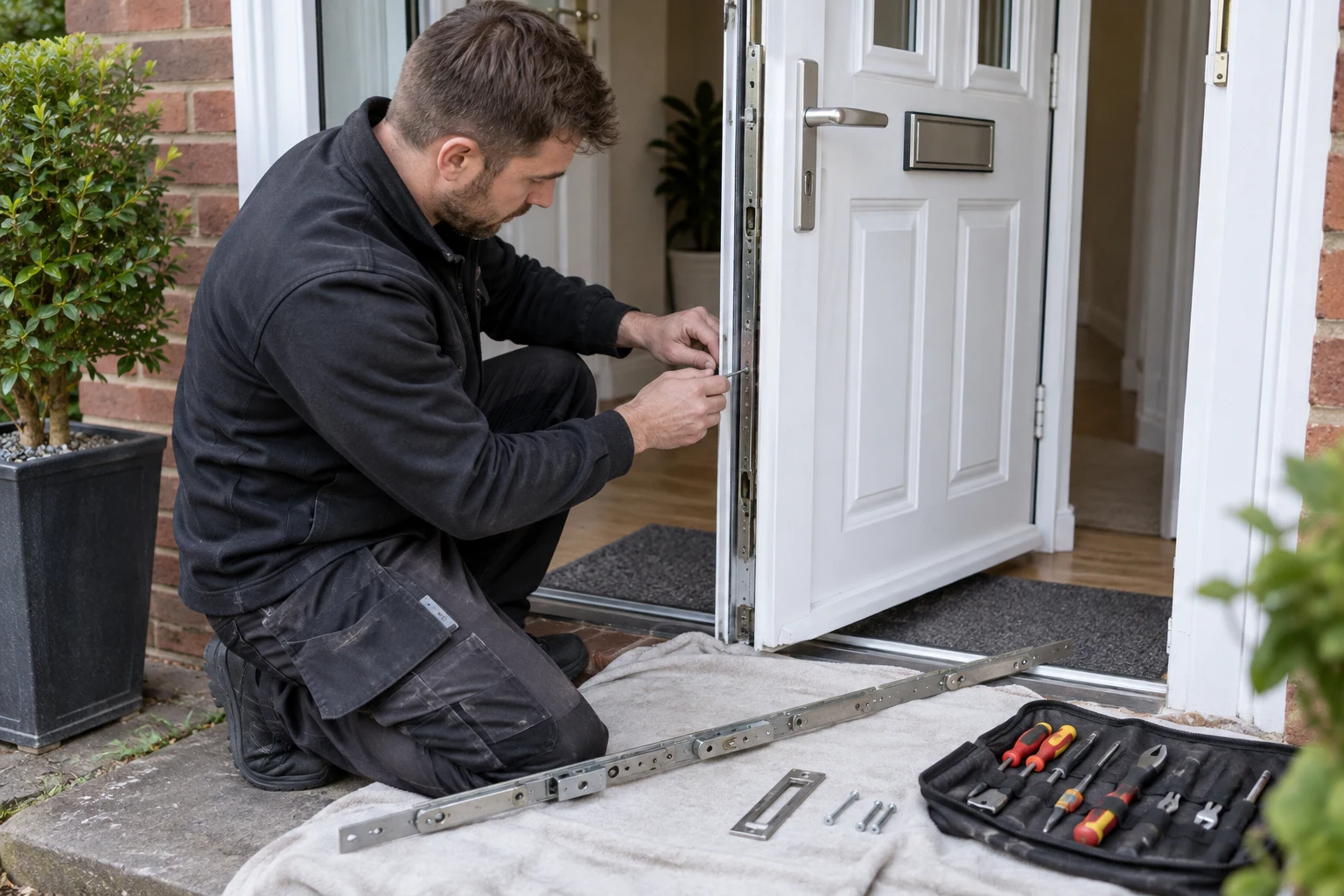
If you notice any of the signs described here, the sensible next step is to have a qualified locksmith inspect the door. A professional can tell quickly whether the cylinder alone needs replacing or whether the whole lock mechanism has worn out. They will also check the door alignment and the condition of the keeps, which are easy to miss but essential for the lock to work properly. Trying to adjust a multipoint lock without the right tools can leave the door misaligned and harder to close, so this is one of those jobs where experience makes a real difference. A good locksmith will also advise on whether your current lock meets the level of security you need, especially if you are thinking about upgrading to a high security lock for peace of mind.

Paying attention to how your door lock feels and sounds now can save you the hassle of a lockout later. The signs are usually there weeks before a full failure, and catching them early means you can plan the repair rather than having to rush it. Whether it is a stiff key, a loose handle, or a lock that no longer aligns with the frame, each symptom points to the same conclusion: the lock has done its job for years, but it is time to let it retire.